



A customer leaves a restaurant, checks out of a hotel, finishes a salon appointment, or receives a delivery. They could leave a review. They could complete a survey. Or, if they had a particularly good experience, they could simply leave a tip.
That tip may not be a formal customer satisfaction score, but it can still tell a business something valuable. A tip can also show that a customer appreciated the experience, even if it cannot explain exactly why.
As digital payments continue to become part of everyday transactions in Nigeria, businesses now have an opportunity to make that moment of appreciation easier through digital tipping.
What Does Tipping Have to Do With Customer Feedback?
Tipping and customer feedback are not the same thing.
A customer who leaves a ₦2,000 tip is not necessarily giving the business a five-star rating. Likewise, a customer who does not leave a tip is not necessarily unhappy with the service.
Instead, a voluntary tip can be viewed as one additional signal of customer appreciation.
For example, if customers consistently tip a particular waiter, stylist, driver, or service professional, that pattern may indicate that something about the experience is working well.
It could be their friendliness, speed, professionalism, attention to detail, or simply the way they made the customer feel. A tip does not provide the answer by itself, but it can give the business a reason to look closer.
That is where digital tipping becomes particularly interesting.
Tipping Is a Signal, Not a Survey
Businesses should never treat tipping as a replacement for proper customer feedback.
A customer survey can ask:
“How would you rate your experience?”
The customer might respond with a rating and explain what they liked or disliked. A digital tip is different.
The customer is effectively saying:
“I appreciated this service enough to give something extra.”
These are two different types of information. Customer surveys, reviews, interviews, and direct conversations can help businesses understand what customers think and why.
Tips can provide an additional behavioural signal about when customers choose to show appreciation.
The most useful approach is therefore not to choose between tipping and feedback, but to use them together.
Why Traditional Customer Feedback Can Be Difficult to Collect
Businesses often want to know how customers feel about their service, but getting customers to complete surveys or leave reviews can be difficult.
After leaving a restaurant, hotel, salon, store, or delivery interaction, customers usually move on to the next thing. A feedback form can feel like another task, while tipping can differ because it can occur naturally in the moment of appreciation.
When a customer has just experienced excellent service, tipping can be a simple way to express appreciation without completing a lengthy survey. This is especially relevant as more Nigerian consumers become comfortable with electronic payments.
Digital tipping can let businesses create an easy way for customers to act on their appreciation while the experience is still fresh.
Businesses Can Learn From Digital Tips
The value of tipping is not necessarily in one individual transaction. It is in the patterns that emerge over time.
Imagine a restaurant in Lagos where customers have an easy way to tip their servers digitally. Over several weeks, the business notices that one particular waiter consistently receives tips.
That does not automatically prove that the waiter provides better service than everyone else. However, it does give the business something worth exploring.
Perhaps customers appreciate the waiter's friendliness. Maybe they are particularly attentive, explain the menu well, respond quickly, or simply create a better overall experience.
The business can then combine that observation with customer reviews, conversations, and other feedback to understand what is driving the positive response.
The process becomes:
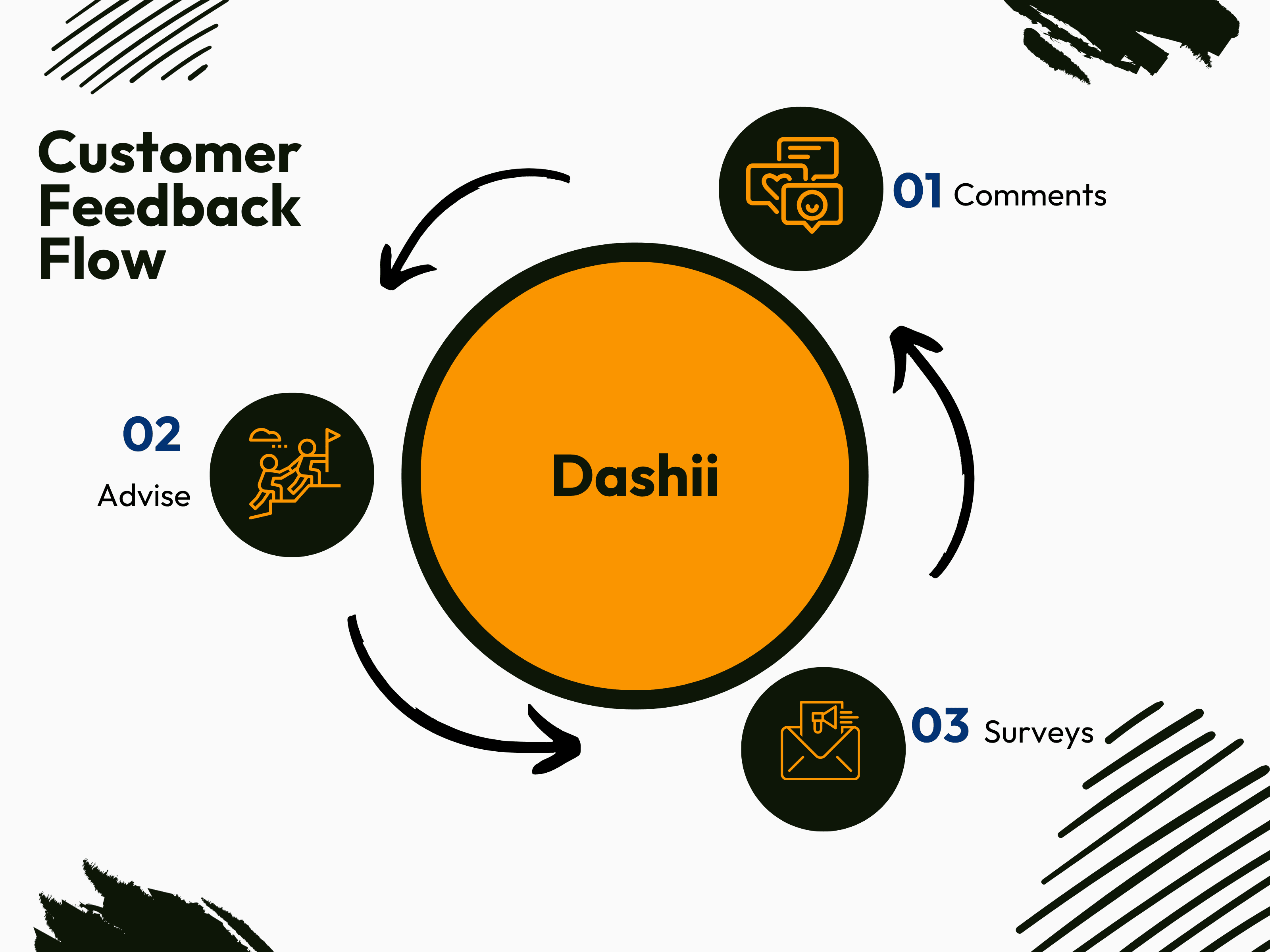
Digital tip → identify a pattern → investigate → understand what customers value → improve the experience.
That is where tipping can complement customer feedback.
What Businesses Should Look For
Businesses do not need to analyse every individual tip as if it were a customer survey. Instead, they can look for recurring patterns.
For example:
- Which employees consistently receive tips?
- Are customers more likely to tip after particular services?
- Do tips increase after changes to the customer experience?
- Which customer touch points generate the most appreciation?
- Are customers more likely to tip when digital payment options are easy to access?
These patterns can help businesses identify areas of strength and opportunities to improve and importantly, businesses should avoid making assumptions based on a single tip or the absence of one.
The goal is to understand trends, not judge individual customers.
Dashii Makes Digital Tipping Easier
This is where Dashii fits into the customer experience. We give businesses and service professionals a simple way to receive digital tips through a personalised payment page and payment link.
Instead of asking customers to find a bank account number or handle cash, businesses can give customers an easier way to show appreciation digitally. Thereby, customers can open the Dashii payment link, choose an amount, and complete a tip.
Businesses and service professionals can also use QR codes to make the tipping option accessible at physical locations and other customer touch points. This makes appreciation easier to act on while keeping the process simple for the customer.
TLDR
For Nigerian businesses, digital tips can provide an additional signal of customer satisfaction and help businesses understand what customers value about their service.